Teaching is one of the most rewarding professions, but it's also one of the most demanding. Research consistently shows that teachers work far beyond their contracted hours, with assessment-related tasks consuming a significant portion of their time. The good news? There are proven strategies that can dramatically reduce this workload without sacrificing educational quality.
The Assessment Time Drain
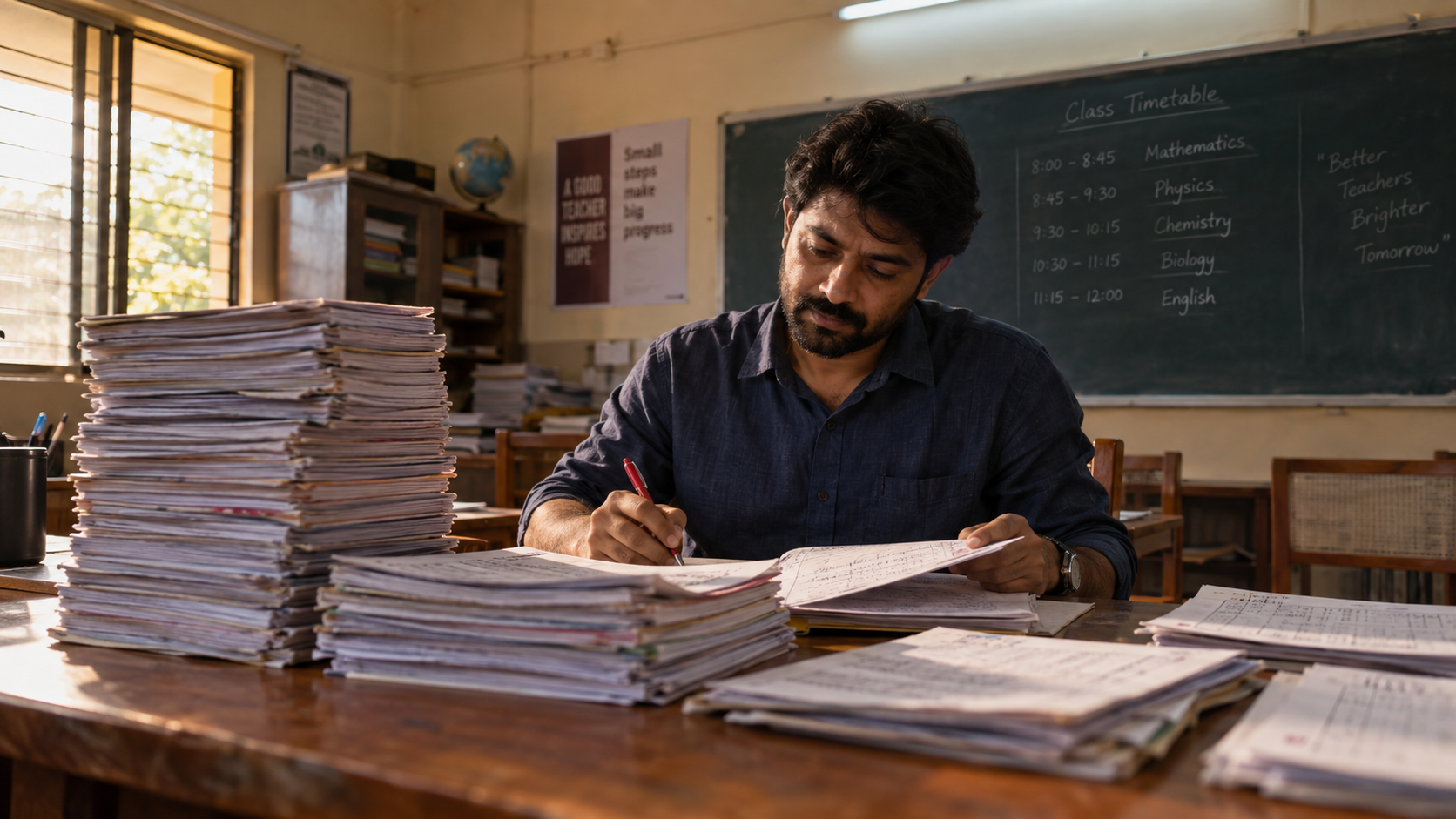
A recent study found that secondary school teachers spend an average of 10-15 hours per week on assessment tasks. This includes creating worksheets, checking answer sheets, providing feedback, and tracking student progress. For many teachers, this means working evenings and weekends just to keep up.
The impact extends beyond time. Teacher burnout is a real concern, and excessive workload is a primary contributing factor. When teachers are overwhelmed with administrative tasks, they have less energy for what matters most: inspiring students and creating engaging learning experiences.
Strategy 1: Automate Worksheet Generation
Creating quality worksheets is time-consuming. Teachers often spend 2-3 hours crafting questions that align with curriculum, difficulty levels, and learning objectives. AI-powered worksheet generators can create curriculum-aligned questions in minutes, not hours.
The key is finding tools that understand your specific curriculum. At Chanakya AI, our system generates ICSE and CBSE-aligned questions that match your chapter plans and difficulty requirements. Teachers can still customize and regenerate questions, but the heavy lifting is done automatically.
Strategy 2: Implement AI-Powered Answer Checking
Manual answer checking is perhaps the most time-intensive assessment task. A teacher checking 40 answer sheets might spend 6-8 hours, especially for subjects requiring detailed evaluation like Mathematics or Science.
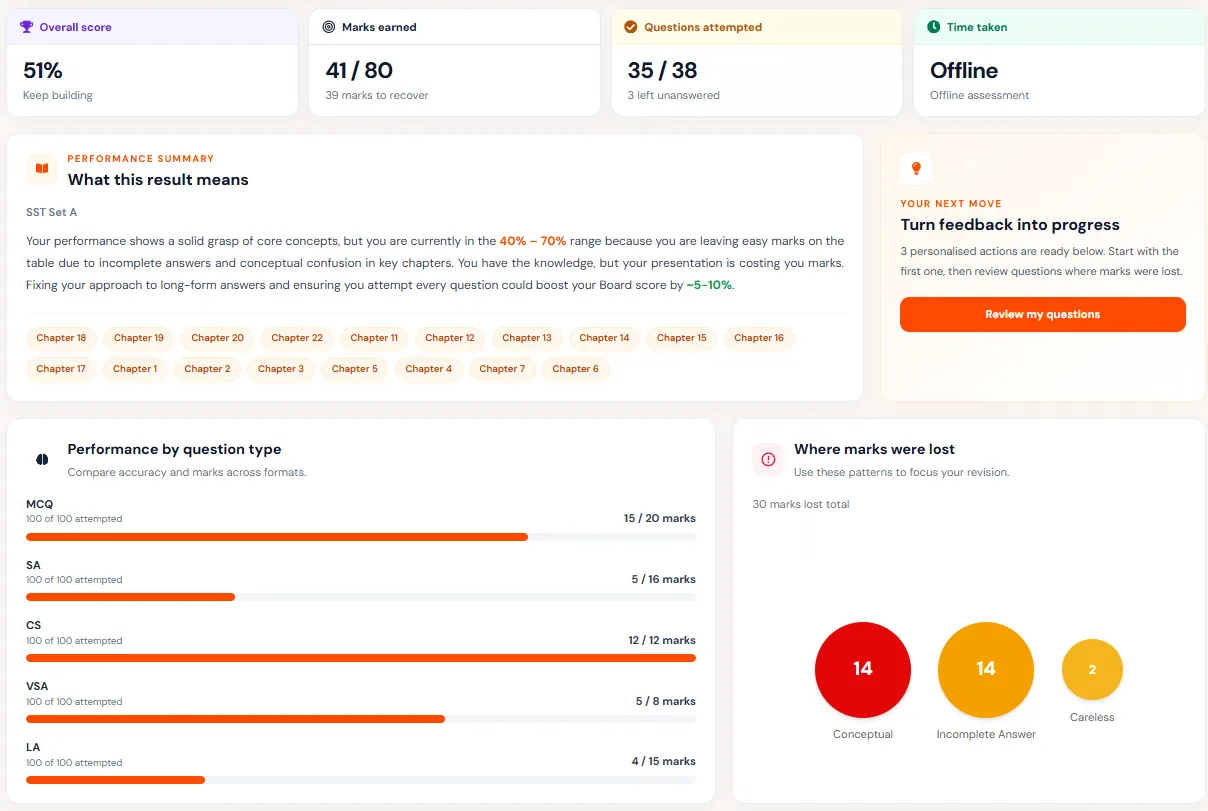
Modern AI systems can evaluate handwritten answers with 95% accuracy, providing marks, mistake identification, and feedback in seconds. This doesn't eliminate teacher oversight—it shifts their role from mechanical checking to strategic review and intervention.
Strategy 3: Batch Processing and Scheduling
Instead of checking papers as they come in, establish a regular schedule. Many successful schools batch assessment tasks: worksheets distributed on Monday, collected by Wednesday, evaluated by Friday. This creates predictable workflows and reduces context-switching.
AI evaluation fits perfectly into this model. Teachers can review AI-generated insights and feedback on Friday, then use Monday for targeted remediation based on identified weak areas.
Strategy 4: Focus on High-Impact Feedback
Not every assessment needs detailed written feedback. Research shows that students benefit most from specific, actionable feedback on key concepts. Use AI to provide detailed feedback automatically, then have teachers add personal notes on critical areas or struggling students.
This approach ensures every student gets comprehensive feedback while teachers focus their limited time on the most impactful interventions.
Strategy 5: Leverage Analytics for Proactive Intervention
Traditional assessment often means discovering problems after exams. AI-powered analytics can identify learning gaps in real-time, allowing teachers to intervene before small issues become major problems.
When teachers can see which topics are causing confusion across the class, they can adjust their teaching immediately rather than waiting for term-end results.
The Results: More Time for What Matters
Schools implementing these strategies report teachers saving 8-10 hours weekly on assessment tasks. More importantly, teachers report feeling less stressed and more engaged with actual teaching. Students benefit from faster feedback and more personalized attention.
The goal isn't to eliminate teacher involvement in assessment—it's to eliminate the repetitive, time-consuming tasks that prevent teachers from doing their best work. When technology handles the routine, teachers can focus on inspiration, mentorship, and the human connection that makes education transformative.