Reading handwritten text has long been considered a uniquely human skill. The variations in handwriting style, the context-dependent interpretation, the ability to understand meaning despite imperfect formation—these seemed beyond the reach of machines. Until recently.
The OCR Revolution
Optical Character Recognition (OCR) technology has existed for decades, but early systems were limited to printed text with consistent fonts. Handwriting recognition was considered too complex, too variable, too human.
Recent advances in artificial intelligence, particularly deep learning and neural networks, have changed this. Modern OCR systems can now read handwritten text with remarkable accuracy, even when dealing with the varied, sometimes messy handwriting of students.
How It Works: The Technical Process
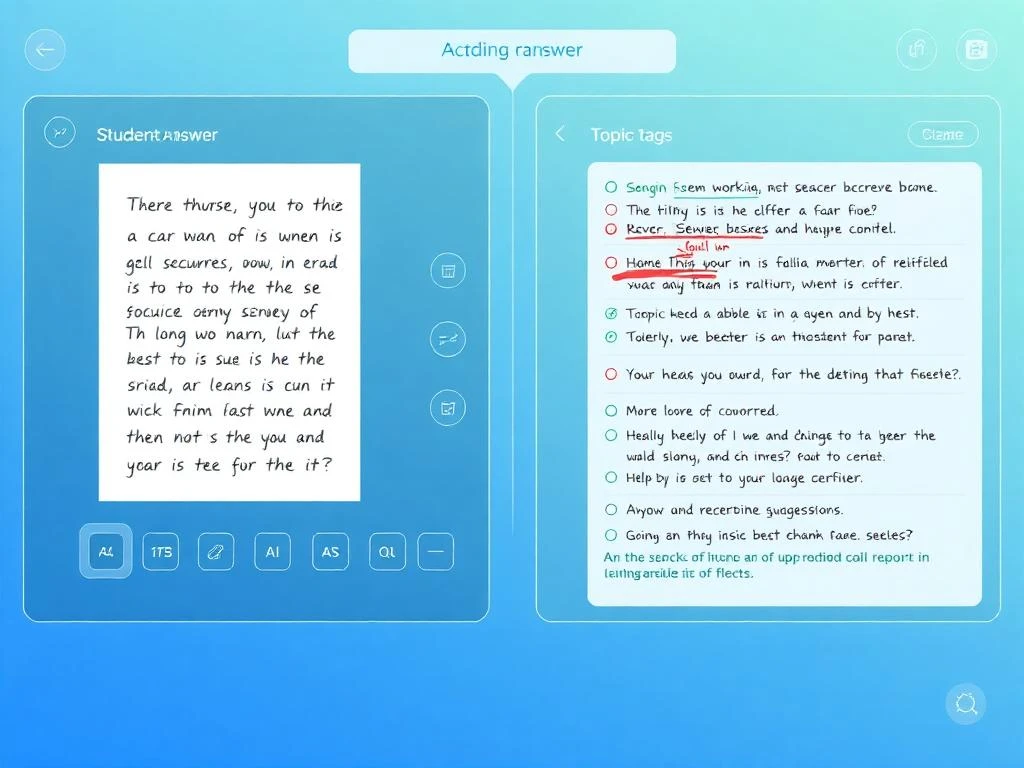
1. Image Preprocessing: The system first enhances the image—adjusting contrast, removing noise, and normalizing the image to improve recognition accuracy.
2. Text Detection: AI identifies regions containing text, distinguishing between text and diagrams, drawings, or blank spaces.
3. Character Segmentation: The system breaks down words into individual characters, a challenging task when letters are connected or overlapping.
4. Character Recognition: Deep learning models analyze each character, comparing it against thousands of training examples to determine the most likely interpretation.
5. Context Understanding: Advanced systems use language models to understand context, helping resolve ambiguities. For example, 'teh' in context likely means 'the.'
6. Post-Processing: The system applies grammar rules, spell-checking, and domain-specific knowledge (like mathematical notation) to refine the interpretation.
The Challenge of Student Handwriting
Student handwriting presents unique challenges:
Variability: Every student writes differently. A system trained on one style may struggle with another.
Quality: Student handwriting can be rushed, messy, or inconsistent, especially under exam conditions.
Mixed Content: Student answers often combine text, numbers, mathematical symbols, and diagrams.
Language Variations: Indian schools may need support for English, Hindi, and regional languages, each with different character sets.
Training the AI
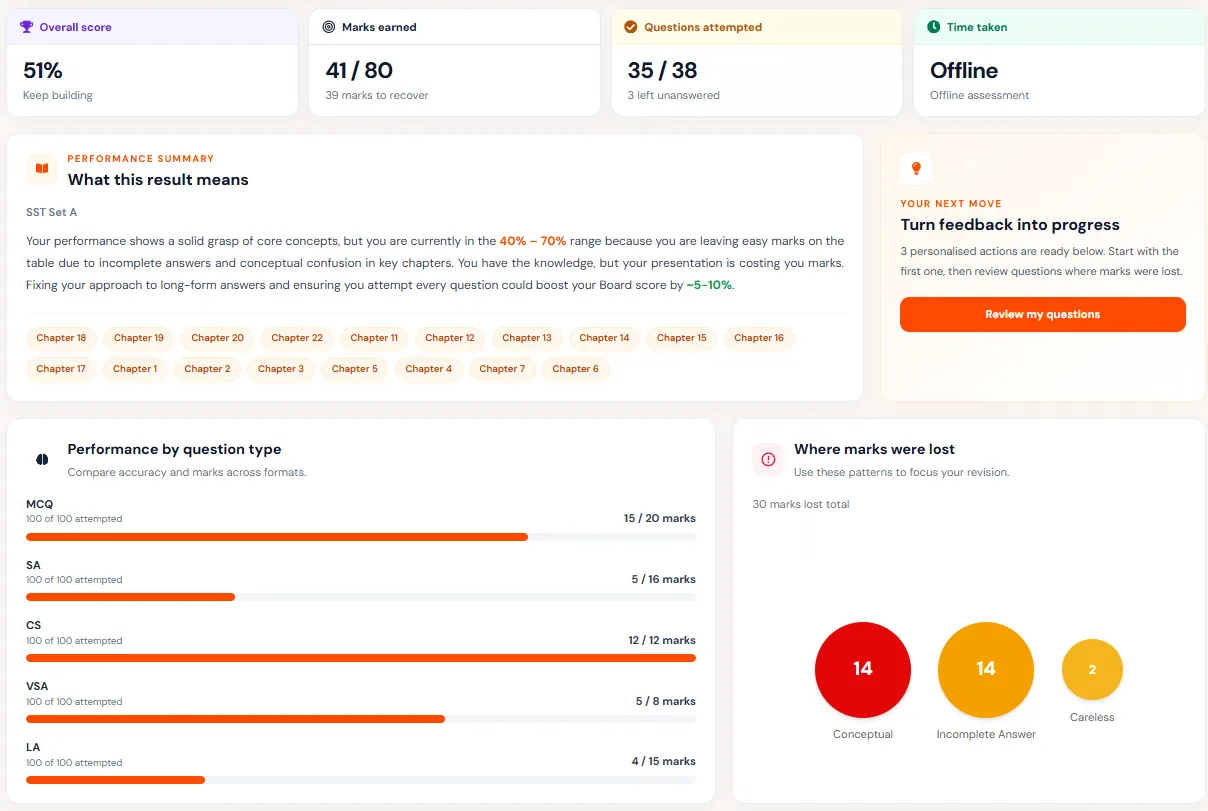
Modern handwriting recognition systems are trained on massive datasets containing thousands of handwriting samples. At Chanakya AI, we've trained our models specifically on student handwriting from ICSE and CBSE schools, ensuring the system understands the context and patterns of Indian student writing.
The training process involves showing the AI millions of examples of handwritten text along with the correct interpretation. Over time, the AI learns to recognize patterns, handle variations, and make accurate predictions even for handwriting it hasn't seen before.
Accuracy and Limitations
Current state-of-the-art systems achieve 95% accuracy on student handwriting—remarkable, but not perfect. The remaining 5% represents edge cases: extremely messy handwriting, unusual symbols, or ambiguous characters.
This is why human oversight remains important. AI handles the routine cases, flagging uncertain interpretations for teacher review. This hybrid approach combines AI efficiency with human judgment.
Beyond Reading: Understanding Meaning
Reading text is only the first step. The real challenge is understanding what the student meant. This requires:
Semantic Understanding: Does the answer make sense in context?
Mathematical Interpretation: In math problems, understanding the solution method, not just the final answer.
Partial Credit Recognition: Identifying when a student's approach is correct even if the execution has errors.
Conceptual Analysis: Determining whether an error represents a calculation mistake or a fundamental misunderstanding.
The Future of Handwriting Recognition
As AI systems become more sophisticated, we're moving toward systems that don't just read handwriting—they understand it. Future developments may include:
Real-time Recognition: Systems that can read and evaluate handwriting as students write.
Multi-language Support: Seamless recognition across English, Hindi, and regional languages.
Symbol Recognition: Better handling of mathematical notation, scientific diagrams, and subject-specific symbols.
Emotion and Intent Detection: Understanding not just what students wrote, but how they approached the problem.
Implications for Education
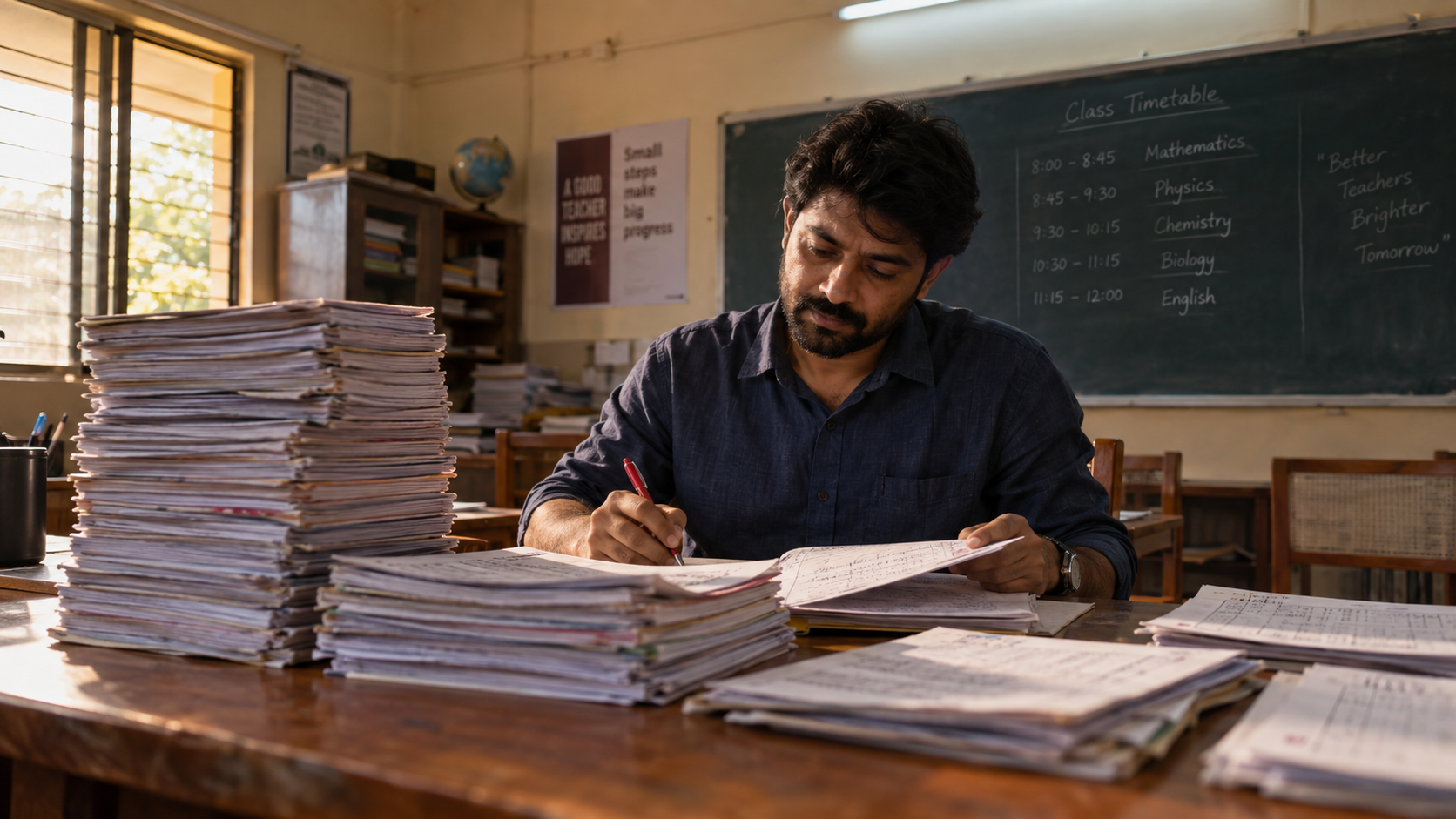
The ability to accurately read and understand handwritten student work opens new possibilities for education. Teachers can provide faster feedback, students can learn from mistakes immediately, and schools can track learning at a scale previously impossible.
But the goal isn't to replace human evaluation—it's to augment it. AI handles the routine reading and initial evaluation, freeing teachers to focus on the nuanced judgment, personalized guidance, and human connection that truly transforms learning.
The technology is impressive, but the real value is in how it enables teachers to do their best work: not spending hours reading papers, but spending time understanding students and helping them grow.