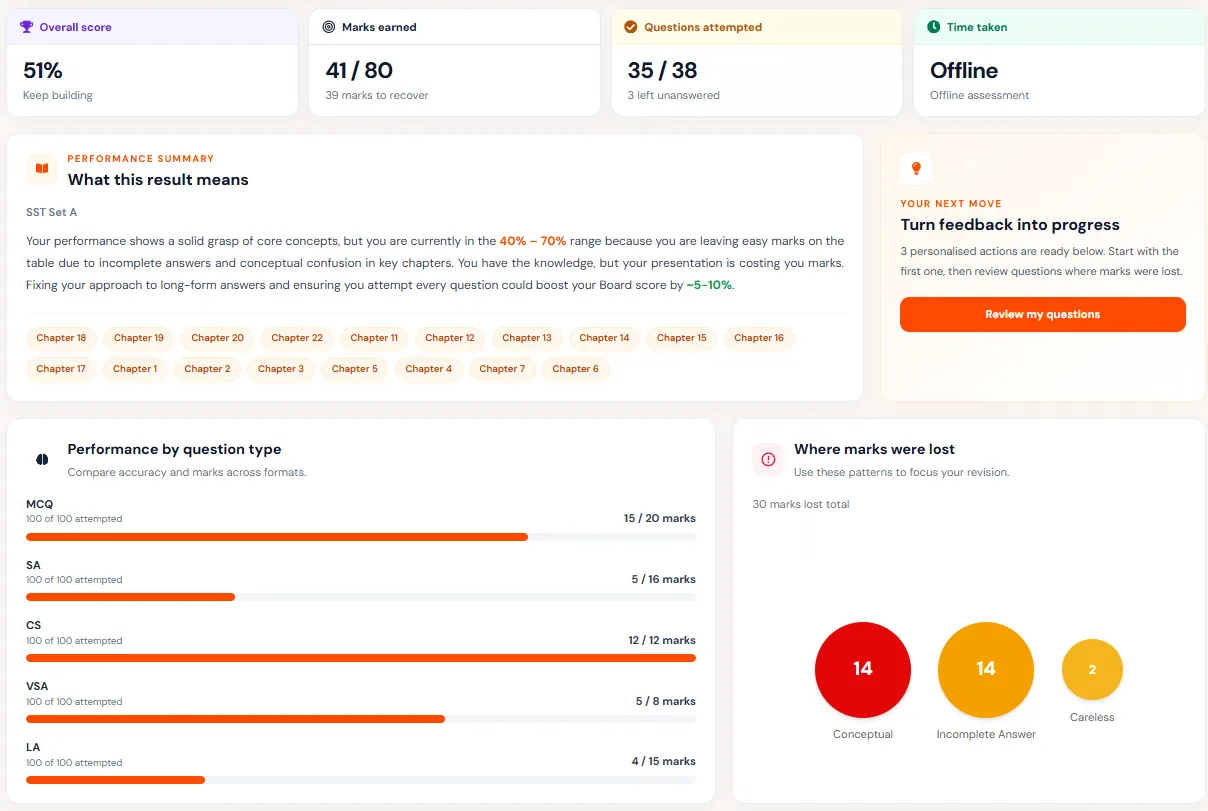
Assessment lies at the very core of learning and teaching, guiding instruction and determining what and how students are taught. With digital technologies transforming education, an evolution is happening in conventional approaches to assessment. This article investigates the differences between formative and summative assessment types and technology's role in bridging the gap.
Defining the Assessment Landscape
Formative Assessment: The Journey
Formative assessment provides continuous guidance throughout learning:
Offers feedback continuously for quick improvement
Concerned with building understanding, not grading
Involved in processes of skill development
Allowing student ownership of learning
Low-stakes to allow experimentation
Examples include class discussion, practice problems, drafts, peer review, and self-testing that give real-time feedback for adjustment.
Summative Assessment: The Destination
Summative assessment measures achievement at an instructional point in time:
Measures learning against established criteria
Shows achievement to stakeholders
Places importance on final demonstration of knowledge
Often high-stakes with great grading impact
Standardized assessments across student populations
Examples are finals, standardized tests and capstone projects, and term papers gauging learning achievement.
Digital Evolution in Assessment
Confined assessment possibilities are now expanding through technology in the following:
AI-Augmented Evaluation
Automated grading of multiple-choice items and math solutions
Natural language processing for analysis of short answers and essays
Identification and flagging of error patterns in thousands of responses
Analysis of process beyond end answers
Real-Time Feedback Systems
Adaptive difficulty based on student performance
Targeted support for particular misconceptions
Visual tracking of progress
Reflective cues to move to deeper levels of learning
Chanakya AI: Closing Assessment Types
Contemporary platforms such as Chanakya AI bring together historically distinct approaches:
Continuous Assessment with Substance: Regular mini-assessments leading to complete-picture understanding
Formative Insights from Summative Work: Breaking the results into discrete learning parts with tailored guidance
Scaled Authentic Assessment: Accommodating complex performance tasks with automated scaffolding
Balanced Assessment Strategies Implementation
Successful digital assessment involves:
Aligning formative check-in points and summative benchmarks
Utilizing diverse formats for assessments as robust evidence
Planning frequent low-stakes testing for preparation for high-stakes testing
Utilizing assessment data to inform instructional changes
Ethical Considerations
Implementation of computerized assessment needs to address:
Ensuring access to technology equally, with accommodations
Ensuring student data privacy and security
Ensuring human agency over AI systems
Creating culturally responsive measures
The Future: Blending Boundaries
Future of assessment will entail:
Dynamic systems with portfolios showing growth over time
Tailored courses to meet individual needs
True integration with genuine issues
Interdisciplinary examination of collaborative knowledge
Conclusion
The technology revolution is eliminating artificial differences between types of testing. New instruments such as Chanakya AI allow testing simultaneously that promotes learning and records achievement. The future is for systems integrated into learning with ease—giving real-time advice as one progresses towards expertise in critical skills.