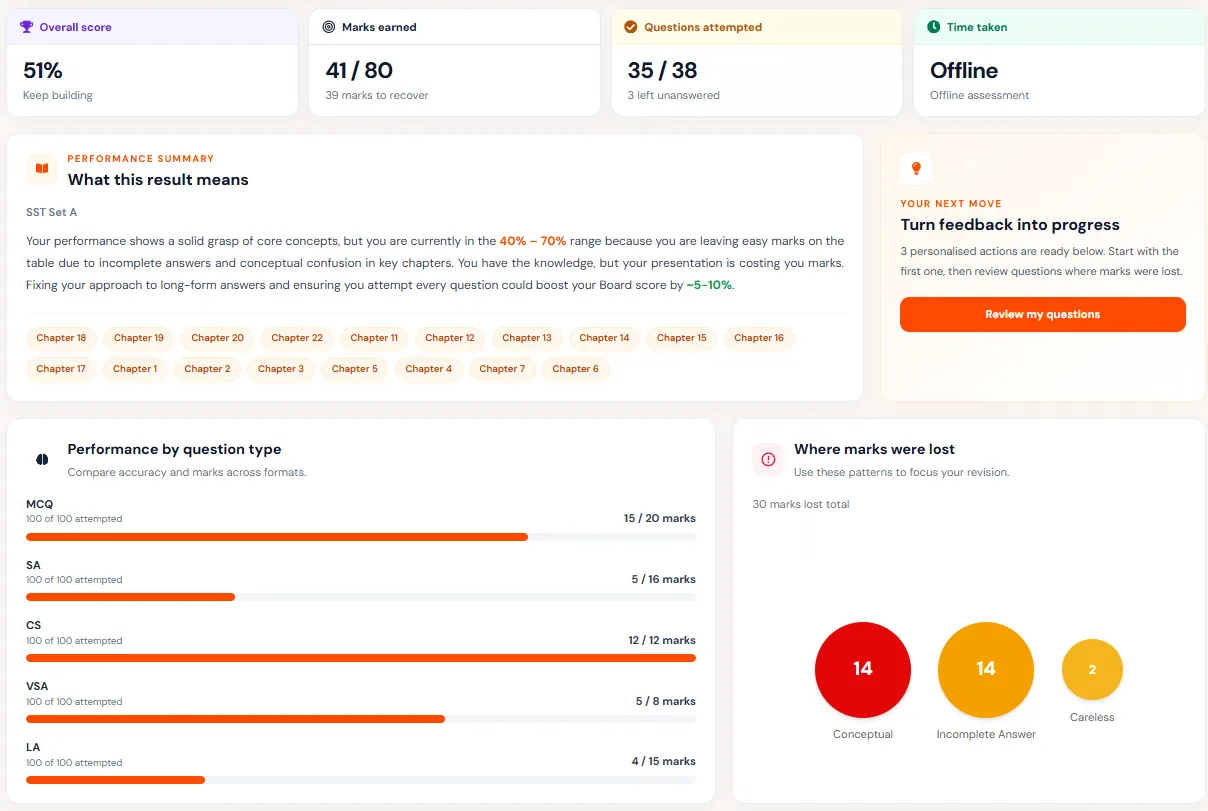
The education sector is experiencing a profound transformation, driven by advances in artificial intelligence that were unimaginable just a decade ago. At the heart of this revolution is assessment—the critical process through which teachers understand what students have learned and where they need support.
The Traditional Assessment Challenge
For generations, teachers have spent countless hours evaluating student work. A typical high school teacher might spend 10-15 hours per week on assessment tasks alone. This isn't just grading—it's creating questions, checking answers, providing feedback, tracking progress, and identifying students who need extra help.
The problem isn't just time. Human evaluation, while irreplaceable for many tasks, can be inconsistent. A teacher grading the 50th paper of the day may not give it the same attention as the first. Fatigue, mood, and even hunger can affect how we evaluate student work.
Enter AI-Powered Assessment
Artificial intelligence offers a solution that complements human teaching rather than replacing it. Modern AI systems can now read handwritten text with remarkable accuracy, understand the meaning behind student responses, and provide instant, consistent feedback.
At Chanakya AI, we've developed technology that achieves 95% accuracy in reading handwritten answers—a task that seemed impossible just a few years ago. But reading is just the beginning. Our AI doesn't just recognize what students wrote; it understands whether the answer is conceptually correct, partially correct, or based on a fundamental misunderstanding.
The Real Impact: What Changes for Teachers
When AI handles the mechanical aspects of assessment, teachers gain something invaluable: time. Time to work one-on-one with struggling students. Time to create engaging lessons. Time to mentor and inspire.
More importantly, AI-powered analytics reveal patterns that would be invisible to even the most dedicated teacher. Which topics are causing widespread confusion? Which students are silently falling behind? Where are the gaps between what's taught and what's understood?
Beyond Grading: The Feedback Revolution
Perhaps the most exciting development is in feedback. Traditional grading often reduces complex learning to a single number. A student who scores 7/10 knows they got something wrong—but what exactly? And more importantly, how can they improve?
AI can provide specific, actionable feedback for every answer. Not just 'incorrect,' but 'You've confused exothermic and endothermic reactions. Here's how to remember the difference...' This level of personalized guidance was previously only available to students with private tutors.
Looking Ahead: The Future of Educational AI
We're still in the early days of AI in education. Future developments will likely include real-time learning analytics, predictive interventions that identify at-risk students before they fall behind, and adaptive assessments that adjust difficulty based on student performance.
But the goal isn't to replace teachers—it's to amplify their impact. The best educational outcomes will come from the combination of AI efficiency and human connection. Technology handles the routine, freeing teachers to do what only humans can: inspire, mentor, and transform lives through education.